

Fa we are
Who we are ... inspired by Jo Gilbert

Having a Glaswegian mum and a dad from Buckie, on the Moray Firth, we grew up with a wide Scottish vocabulary, even though we lived in the north of England.
Believe it or not, our Glaswegian relatives were easier to understand than the Buckie side of the family!
Visiting Buckie meant switching out of our “English” accents and tuning our ears to the regional dialect of 1Doric, which to a visitor could sound like a foreign language. Doric uses many 2completely different words. As a child, I didn’t know it was Doric — I just knew that in Buckie, I was called a quine, not a girl!
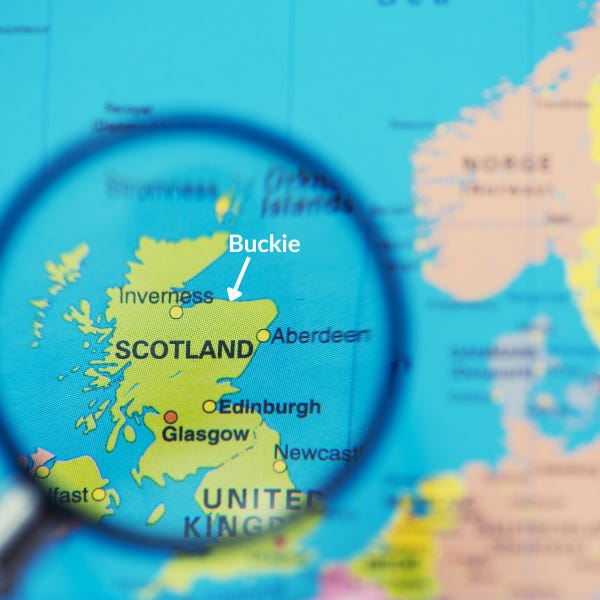
Dad moved away from home at 17 and over time he’d lost, or maybe chosen to modify, his accent. So it's always surprised me how I’m able to follow a conversation in Doric, given that my exposure was mostly through our two-week holidays each summer.
There’s a lot been written about the origins of Doric spoken in North East Scotland. The University of Aberdeen asks Doric: Far dis it come fae? Doric has its origins in the tongue of the Anglo-Saxon invaders, who influenced the language of the Picts inhabiting Northumbria and the borders, then spread up the East coast to Aberdeen and beyond. Centuries later North-East Doric developed and emerged not only as a spoken word but written by playwrights, authors and journalists.
But the spik o the fowk is instantly recognisable as a mark of the highly individual and proudly-proclaimed identity of the North-East: an identity built up by the generations of 3fermers, baillies, orra louns, fishers, cyaards and tinks who shaped the life of the district. As their descendants and their heirs, we would do well to cherish their mither tongue. Derrick McClure
Academics would argue that is not Doric is not a separate language: it is a form of Scots, though a very distinctive one. However, some consider it to be Scotland’s Fourth Language and there are calls for Doric to have same status as English and Gaelic. There is a thriving arts community promoting Doric.
I recently came across Jo Gilbert, a wonderful poet, writer, and spoken word artist from Aberdeen. Jo’s writing and performances reconnected me with the rich language and history of the beautiful North East of Scotland and reminded me of family.
Jo’s poem, "Fa we are," speaks deeply to identity, a sense of self, heritage, and belonging. It captures how the region and its people - their language, their landscape, their culture and shape and define who they are. It's not just where you're from, but who you are because of it.
Here’s the first verse of Jo’s poem:
Fa we are
by Jo Gilbert
"It’s recht fine tae ging awa
bit there’s nithin like comin back
we unser the call o the land whisperin
ye’ve been awa too lang
mon hame quine
come awa ma loon
the North East is fa ye are"
If you need a little translation:
Who we are
"It’s really good to go away
but there’s nothing like coming back
we answer the call of the land whispering
you’ve been away too long
come home, girl
come on, my boy
the North East is who you are"
You can listen to Jo reading Fa We Are in full HERE (there are more verses). Jo has a beautiful voice.
Jo’s words, and the feeling behind them, got me thinking about how we use language in our lives and our communication.
How we speak to each other.
How we understand meaning through tone, rhythm, context, and body language.
How our language is shaped by culture, region, generation, and the stories of those who came before us.
I’m dedicating this post to my Uncle Stewart, who recently passed away. A Buckie boy who became an American citizen, spending many decades in the USA. His daughter, Staci, plans to return some of his ashes to Buckie.
The words of Jo’s poem seem the perfect call:
"Stewart, ye’ve been awa too lang, come awa ma loon, the North East is fa ye are."
"Doric" refers to the Scots dialect spoken in the northeast region, particularly around Aberdeen. It's a distinctive and well-preserved form of the Scots language, distinct from other Scottish dialects.
If you’re interested in a Doric Dictionary - you may download a fun sized PPF from Robert Gordon University here.
Fermers – Farmers. Baillies – Magistrates or town officials. Orra louns – Odd-job men. Fishers – Fishermen. Cyaards – Travelling people or Gypsies. Tinks a travelling tinsmith or mender of household utensils, often associated with the Scottish Traveller community.
what a beautifully nostalgic read, Aileen. Super interesting and although I don't know you I now know something about you, and your family, and that feels tender and satisfying somehow. Maybe because it's educated me about a part of the country I've got now knowledge of, by way of their language. Thank you.